
Designing for extrusion: rules that cut cost and lead time
6 min read
A handful of profile-design choices drive tooling cost, quality, and lead time. Here are the ones that matter most.
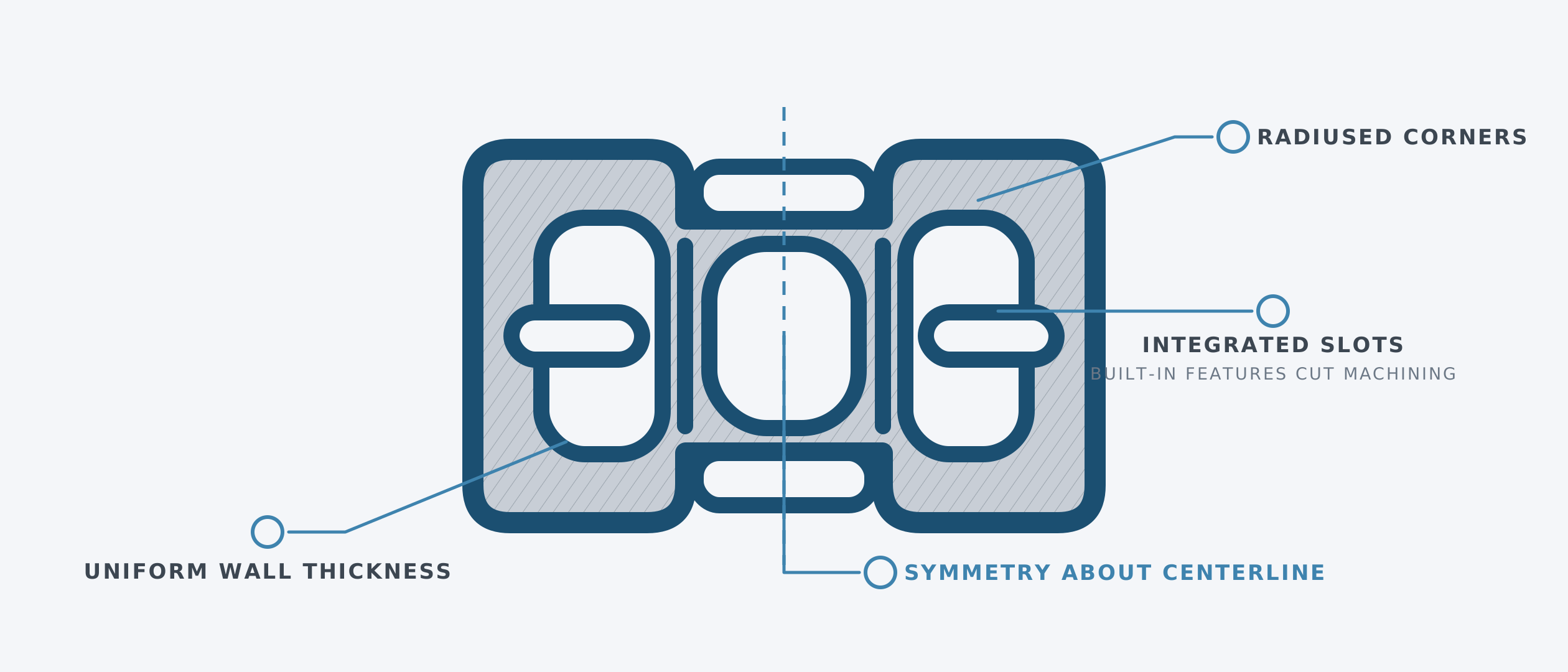
Good extrusion design happens before the die is cut. A few choices about wall thickness, symmetry, corners, and tolerances decide how cleanly your profile runs — and how much it costs. Here are the rules that matter most.
Keep wall thickness uniform
Aluminum flows best through a die when walls are even. Many medium profiles run well at 1.5–3 mm; very large or structural sections need more. Uneven walls cause the metal to flow at different speeds, which distorts the profile, while excessively thick walls waste material and slow the press because of the added cooling time. Uniform walls improve quality and lower cost.
Favor symmetry
Symmetrical profiles let pressure and metal flow evenly across the whole section, reducing distortion, extending die life, and keeping dimensions stable. The more balanced the shape, the cheaper and more consistently it runs.
Round the corners
Sharp internal corners concentrate stress and disrupt flow. Add a radius — a good baseline is at least 0.5× the wall thickness — so the metal flows smoothly and the die lasts longer.
Don’t over-tighten tolerances
Standard extrusion tolerances are more cost-efficient and are enough for most applications. Call out tight tolerances only where the part truly needs them, and reserve precision for a secondary machining operation where it is cheaper to hold.
Use a standard shape when you can
If a standard profile fits, you skip custom die cost and shorten lead time dramatically. Browse the AES standard-shapes catalog before committing to a custom die — and where you do need custom, our production assistance helps simplify the profile before tooling.
- Uniform wall thickness and symmetry are the two biggest levers on quality and cost.
- Radius internal corners to at least 0.5× wall thickness for clean flow and longer die life.
- Use standard tolerances unless the part demands tighter — and check the standard-shapes catalog before tooling a custom die.
Talk to us about your profile — production assistance from spec to part.
Request a quote