
Finishing options for aluminum extrusions: anodize, powder coat, or mill?
6 min read
The three ways to finish an extruded aluminum part — how each works, how they compare, and how to choose.
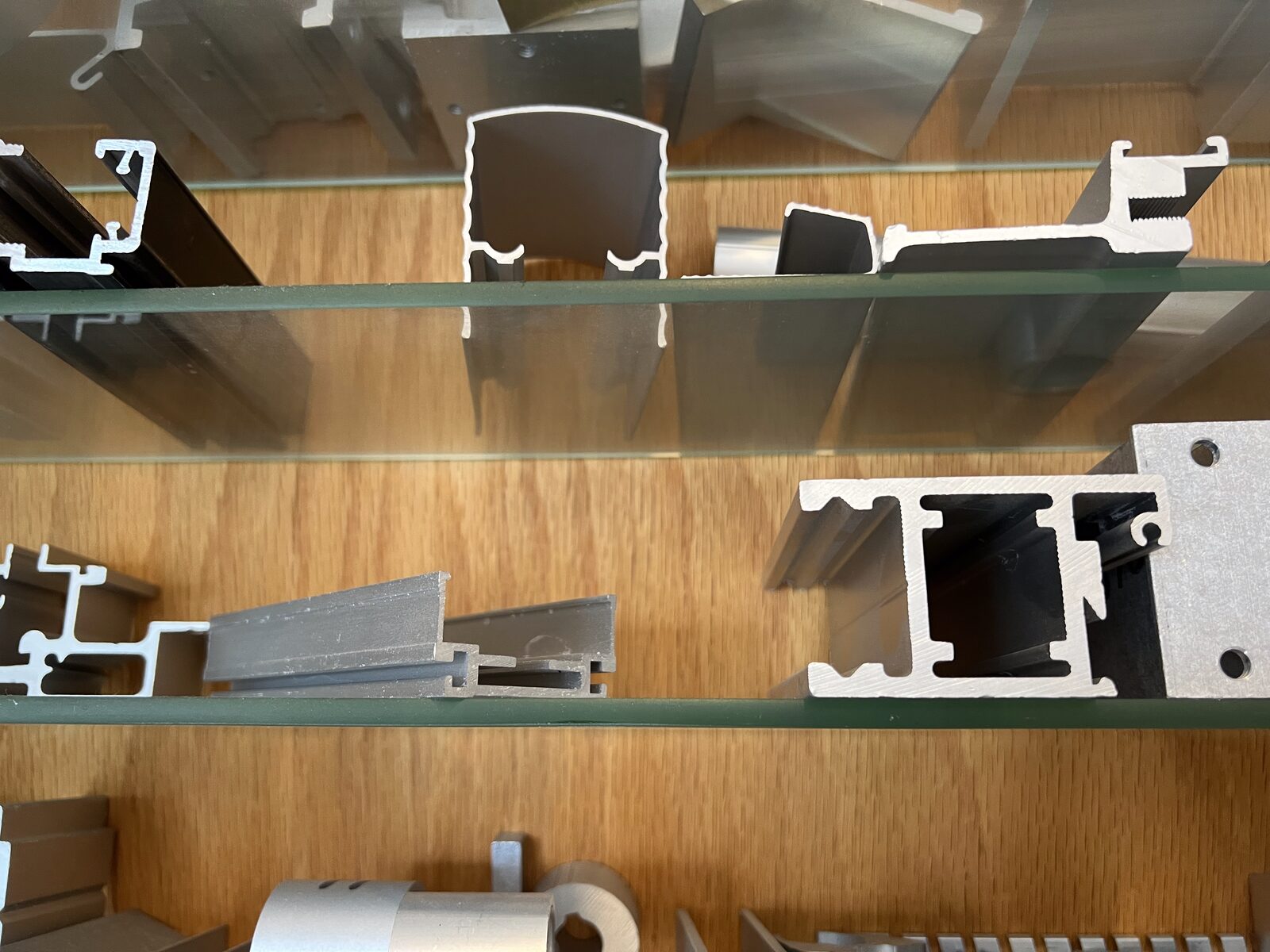
The finish on an aluminum part is more than looks — it sets corrosion resistance, durability, color, and cost. There are three common routes for extrusions: mill finish, anodizing, and powder coating. Here is how each works and when to choose it.
Mill finish — the raw profile
Mill finish is aluminum’s natural surface straight off the press, with no coating applied. It can carry die marks, a dull look, and surface oxidation, but bare aluminum is also naturally corrosion-resistant and long-lasting. It is the lowest-cost option, best where appearance does not matter or the part is hidden.
Anodizing — a finish that becomes the metal
Anodizing is an electrochemical process that thickens aluminum’s natural oxide layer, converting the surface itself into a hard, durable finish. Because it is part of the metal rather than a coating on top, an anodized finish will not peel, chip, or flake. It gives a deep, rich metallic look — the layer is translucent, so you still see the aluminum beneath — in metallic and natural tones such as silver, bronze, black, and champagne. Anodizing is the go-to for architectural facades, window systems, railings, and demanding or coastal environments where long-term corrosion resistance is critical.
Powder coating — color and versatility
Powder coating applies electrostatically charged powder that is cured under heat into a smooth, protective layer. Its strength is color and texture: a broad range of colors, gloss levels, and metallic or matte effects, with consistent batch-to-batch uniformity. It resists UV well, which makes it popular outdoors, and it is typically lower cost than anodizing. The trade-off is that it is a coating on top — if it is breached, corrosion can spread beneath it.
How to choose
If you need a specific color or texture, powder coat. If you need a premium metallic look with maximum corrosion resistance — especially architectural or marine — anodize. If appearance does not matter and cost rules, mill finish. Many products mix finishes across different parts.
Single-source finishing at AES
Anodize and powder coat are available as part of the job — coordinated through AES’s single-source finishing, so you get the spec and finish you need on one PO, instead of managing finishers yourself.
- Anodizing becomes part of the metal — it will not peel; best for corrosion resistance and architectural metallic looks.
- Powder coating wins on color and texture variety and UV resistance, at a lower cost than anodizing.
- Mill finish is cheapest and naturally corrosion-resistant — for hidden parts or where appearance does not matter.
Talk to us about your profile — production assistance from spec to part.
Request a quote